Construction Permits for Foreigners in Mexico: Step-by-Step 2026
Updated August 2026 • By Recrea Construction • 6 min read
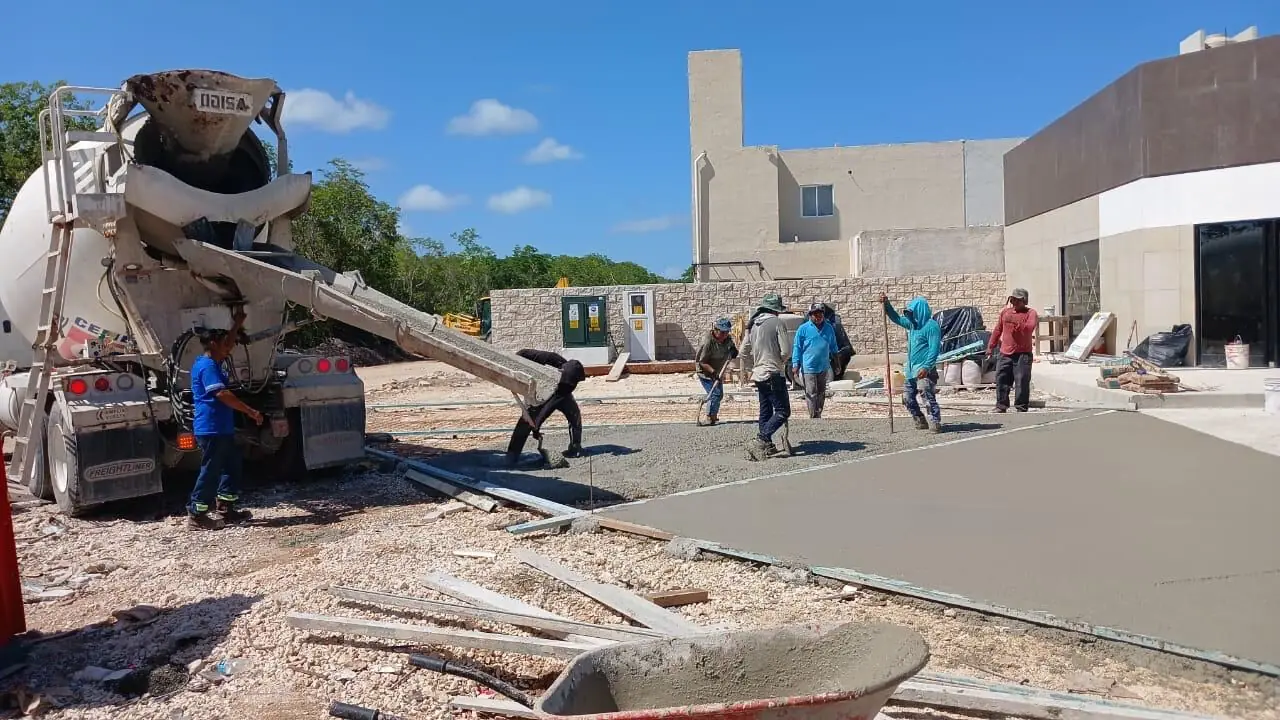
The permitting process itself does not change because the owner is foreign. The same land-use certificate, the same municipal licence, the same DRO, the same environmental file. What changes is the ownership structure the permits attach to, the tax registration that lets you be invoiced properly, the documents that let someone act for you while you are abroad, and the practical machinery of running a construction project from another country.
This covers those four things in the order they arise, and it is written for the situation most of our clients are actually in: buying land or building in the restricted coastal zone, resident somewhere else, visiting a few times a year.
Ownership: Fideicomiso or Mexican Company
Within 50 km of the coast and 100 km of a land border — the restricted zone, which includes the entire Riviera Maya — a foreign individual cannot hold direct title to residential land. Two established routes exist.
- Fideicomiso (bank trust). A Mexican bank holds title as trustee and you are the beneficiary with all rights of use, lease, improvement, sale and inheritance, for a renewable term. It requires a permit from the Ministry of Foreign Affairs (SRE), it is set up before a notary, and it carries a setup cost plus an annual bank fee. This is the normal route for a home, and it is what the great majority of foreign-owned houses on this coast sit in.
- Mexican company. A Mexican corporation may hold land directly, including in the restricted zone, and foreigners may own the company. This suits commercial property, rental operations run as a business, and multi-property investors, and it brings corporate accounting, annual filings and tax obligations. It is generally the wrong structure for a single family home and the right one for a genuine business.
- Which to choose depends on your purpose, your tax position in your home country and how many properties you intend to hold. Get advice from a Mexican tax professional and, importantly, from someone in your own jurisdiction — the two answers interact, and a structure that is efficient here can be inefficient at home.
- Either way, the permits attach to the owner of record — the trust or the company — which means the ownership structure must be in place before the licence application, not alongside it.
Note also the practical point people find surprising: the fideicomiso does not restrict what you build or how you use the property. It is a title-holding mechanism, not a set of conditions.
RFC, Invoicing and Powers of Attorney
RFC and facturas. Mexican businesses invoice through the SAT electronic invoicing system, and a proper factura requires tax details for the recipient. Foreign owners building here commonly obtain an RFC (tax registration) so that construction, professional services and materials can be invoiced correctly — which matters for your records, for any future capital-gains calculation on sale, and for VAT treatment. Whether you need one, and in what form, depends on your structure and your intentions; ask a contador before the first significant payment rather than after a year of receipts that are not facturas.
Powers of attorney. Permit applications, notary appointments, utility contracts and bank matters all need someone present who is authorised to act. A power of attorney granted before a Mexican notary — or executed abroad, apostilled and translated — lets your lawyer, your project manager or a trusted representative sign specific acts on your behalf. Two practical rules: scope it narrowly to the acts you actually intend, and keep the property-disposal power out of any instrument you give casually. A power that can sell your land is not a convenience document.
Who signs what:
- The DRO signs the project and the works and carries the regulatory responsibility. This is a registered Mexican professional; the owner's nationality is irrelevant to it.
- The owner of record — trust or company — is the applicant for the licence, acting through an authorised representative if you are abroad.
- The notary handles the purchase, the trust constitution, any condominium regime and powers of attorney.
- Utility contracts (CFE, water) are taken in the name of the owner of record, with the same representation question.
Get a Free Quote in 2 Minutes
Tell us about your project — we respond via WhatsApp faster than any builder in the Riviera Maya
Running a Build From Abroad
Most of our clients are not in Mexico during construction. What makes that work is structure rather than trust:
- A fixed-price contract with an itemised budget, not cost-plus with an unpriced scope. You cannot supervise a cost-plus job from another country.
- Payments tied to verified physical progress, not to calendar dates — design and permits, foundations, structure, envelope, MEP rough-in, finishes, external works, handover.
- Retention of five to ten percent released after the snag list is closed.
- Weekly photo and video reporting, which is not a courtesy — it is the evidence base for releasing each payment.
- Written, priced change orders before work proceeds. Verbal changes agreed on a video call are how remote projects drift.
- One accountable party. Design, engineering, permits, DRO and construction under one contract means one party is responsible when something needs resolving. Splitting them across an architect, a permit expediter and a contractor leaves the coordination to you, from a different time zone.
- An explicit exclusions list: furniture, appliances, landscaping beyond a defined line, utility connection fees, and anything else not in the price.
- Currency plan. The contract is in pesos because the work is bought in pesos; decide deliberately whether to convert at each milestone or up front, rather than leaving it to whenever a payment is due.
On residency: you do not need Mexican residency to own property through a fideicomiso or to build. Residency makes banking, vehicle ownership and long stays easier, and many owners pursue it for those reasons rather than for the construction. And on the practical side of taxes: rental income from the property is taxable in Mexico regardless of where you live, and the sale of the property has Mexican capital-gains consequences in which your documented construction cost — with proper facturas — matters a great deal. That is the strongest argument for getting the invoicing right from the first payment.
Frequently Asked Questions
We Build Across the Riviera Maya
Playa del Carmen
Our home base since 2008. Playacar, Centro, Ejidal, Colosio, Coralina — we know every colonia and every permit office.
Tulum & Aldea Zamá
Eco-builds, boutique hotels, jungle villas. Full SEMA/SEMARNAT permit handling. Eco-regulation experts.
Puerto Aventuras
Marina-front villas, canal homes, gated community construction & renovation since 2010.
Cancún & Hotel Zone
Commercial builds, restaurant fit-outs, condo renovations in Zona Hotelera and residential zones.
Akumal & Puerto Morelos
Beachfront construction, eco-resorts, residential builds in protected coastal zones.
Bacalar & Felipe Carrillo Puerto
Emerging market — boutique hotels, eco-lodges on the Lagoon of Seven Colors.
Ready to Start Your Project?
196+ projects completed. Fixed-price contracts. Free detailed estimate within 48 hours.
Get Free QuoteWhy Build with Recrea
- 196+ projects completed across the Riviera Maya — Playa del Carmen, Tulum, Puerto Aventuras, Cancún, Akumal, Bacalar since 2008
- Fixed-price contracts — itemized budget, no surprises, penalty clauses for delays
- All services in-house — architecture, permits, construction, electrical, plumbing, carpentry, metalwork, pool
- Bilingual team — English/Spanish/German communication with weekly photo and video reports
- 100% permit approval rate — land use, SEMA, construction license, civil protection, all inspections
- 14 rescued projects — we've taken over and completed projects abandoned by other builders
- 1-year structural warranty — we stand behind our work with written guarantees