Structural Engineering in the Riviera Maya: Hurricane-Ready Design
Updated September 2026 • By Recrea Construction • 6 min read
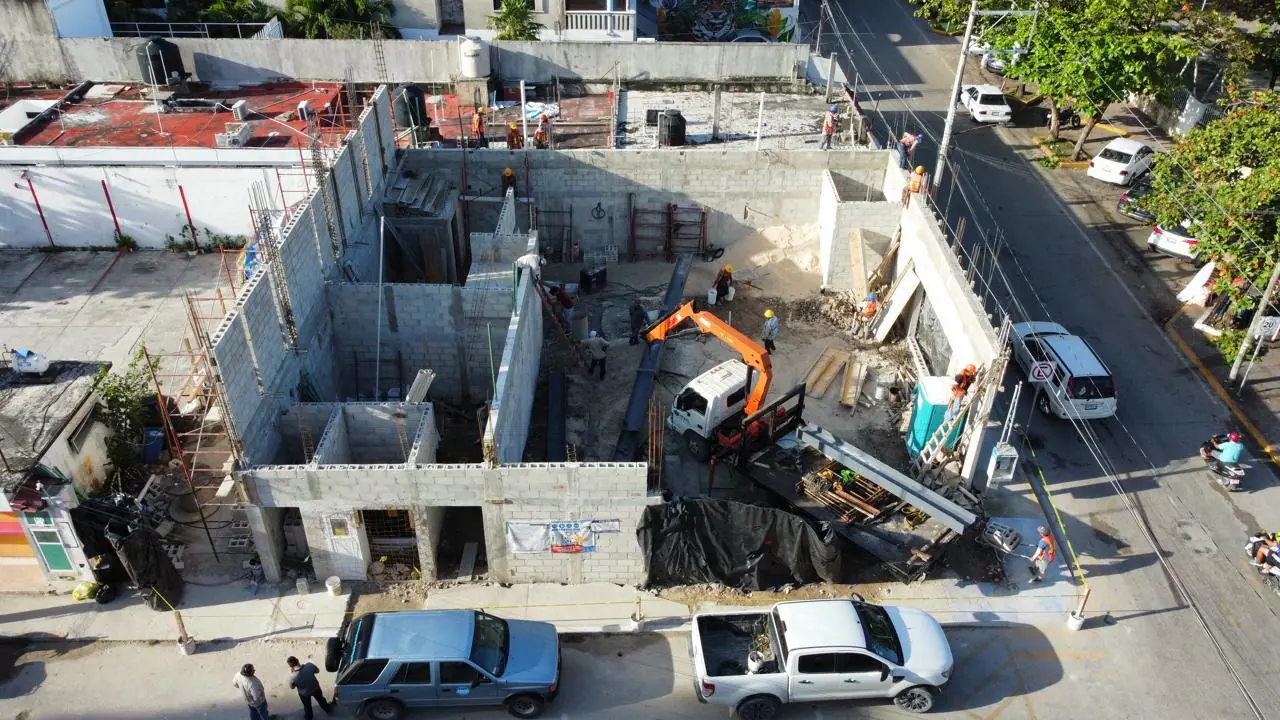
Structural engineering here is shaped by three local facts that override most imported design habits. The region sits in one of Mexico's highest wind-load zones. The ground is karst limestone, which can give excellent bearing at shallow depth and then open into a cavity two metres away. And the atmosphere carries chlorides that attack reinforcement through the concrete cover, which makes durability detailing a structural issue rather than a finishing one.
This is what a competent structural design addresses in Quintana Roo, why the geotechnical study comes before the structural design rather than alongside it, how durability is specified, and where the Director Responsable de Obra fits into the legal chain of responsibility.
Wind Governs, Not Earthquakes
Most of the peninsula is in a low seismic zone, and residential structures here are governed by wind. The design consequences are specific:
- Uplift, not just lateral push. Light roofs, wide eaves, palapas, pergolas and canopies all want to lift. Continuous load paths from the roof plane down into the foundation — straps, dowels, ring beams, holding-down details — are the core of the design.
- Edges and corners take the worst of it. Pressure coefficients are far higher at roof edges, corners and parapets than over the field of the roof, which is why fixing patterns tighten in those zones and why a uniform fixing schedule across a whole roof is a red flag.
- The envelope is structural. If a window or a large door fails, the building pressurises internally and the roof is then being pushed from inside as well as lifted from outside. This is why laminated or impact-rated glazing on large openings is a structural decision.
- Reinforced concrete frames with masonry infill, the regional norm, perform well under these loads — provided the confinement steel, the ring beam (cadena de cerramiento) and the column-to-beam connections are detailed and actually built as drawn.
- Cantilevers and slender roof planes — the signature move in contemporary Tulum architecture — need explicit uplift and deflection analysis, not a rule of thumb.
Karst Ground: the Geotechnical Study Comes First
The limestone shelf that the corridor sits on is soluble, which means it is riddled with dissolution features: cenotes, caves, and cavities filled with soft sediment. Bearing capacity at shallow depth is often very good — better than clients from soft-soil regions expect — and then a probe two metres to one side finds a void.
- A soil study (mecánica de suelos) with borings or probes across the actual footprint is the prerequisite for any structural design here. A single borehole at the centre of the lot does not characterise karst.
- Where cavities are found, the responses are localised: bridge them with a stiffened raft or grade beams, fill and grout, relocate footings, or in extreme cases move the building on the lot. All of these are cheap compared to discovering the void after the slab is poured.
- Shallow water table near the coast affects excavations, cisterns, pool shells and any basement — buoyancy and dewatering become design items, and a pool shell can float if it is emptied at the wrong time.
- Drainage into the aquifer is regulated. Absorption wells (pozos de absorción) and treatment requirements are part of the design, and in the Tulum and Puerto Morelos environmental files they are examined closely, because what goes into the karst reaches the reef.
This is the single most common false economy we encounter: a client skips the $25,000–$60,000 MXN soil study to save time, and then pays several times that in foundation redesign, or builds over a cavity and pays vastly more.
Get a Free Quote in 2 Minutes
Tell us about your project — we respond via WhatsApp faster than any builder in the Riviera Maya
Durability, Concrete Cover, and Who Signs
Chloride attack is the long-term structural risk on this coast. Salt reaches the reinforcement through the concrete cover, depassivates the steel, and the corrosion product expands and spalls the concrete — the brown-stained, flaking slab edges and columns visible on older coastal buildings all over the Caribbean. Design against it:
- Increase the cover on exposed elements — slab edges, columns, balconies, roof beams — relative to inland practice, and control it on site with spacers, because cover achieved is what matters, not cover drawn.
- Lower water/cement ratio and denser mixes reduce permeability, which is the actual mechanism of protection. Specify strength and durability class.
- Epoxy-coated or stainless reinforcement in genuinely aggressive positions: splash zones, beachfront balconies, pool structures.
- Cure properly. In 32°C heat with wind, concrete cured badly for the first week is permanently more permeable. This is free to do right and expensive to fix.
- Detail for water to leave. Drips, throats, falls and no upward-facing traps — standing water on a balcony edge is a chloride pump.
Who is responsible. In Quintana Roo municipalities the construction licence requires a Director Responsable de Obra — a registered professional who signs for the project and the works and carries legal responsibility for compliance. The structural design sits under that signature, as do the plans submitted for the licence. When you engage us, the structural design, the DRO and the site execution are coordinated as one chain of responsibility instead of three parties pointing at each other — which matters a great deal if something is ever questioned.
Frequently Asked Questions
We Build Across the Riviera Maya
Playa del Carmen
Our home base since 2008. Playacar, Centro, Ejidal, Colosio, Coralina — we know every colonia and every permit office.
Tulum & Aldea Zamá
Eco-builds, boutique hotels, jungle villas. Full SEMA/SEMARNAT permit handling. Eco-regulation experts.
Puerto Aventuras
Marina-front villas, canal homes, gated community construction & renovation since 2010.
Cancún & Hotel Zone
Commercial builds, restaurant fit-outs, condo renovations in Zona Hotelera and residential zones.
Akumal & Puerto Morelos
Beachfront construction, eco-resorts, residential builds in protected coastal zones.
Bacalar & Felipe Carrillo Puerto
Emerging market — boutique hotels, eco-lodges on the Lagoon of Seven Colors.
Ready to Start Your Project?
196+ projects completed. Fixed-price contracts. Free detailed estimate within 48 hours.
Get Free QuoteWhy Build with Recrea
- 196+ projects completed across the Riviera Maya — Playa del Carmen, Tulum, Puerto Aventuras, Cancún, Akumal, Bacalar since 2008
- Fixed-price contracts — itemized budget, no surprises, penalty clauses for delays
- All services in-house — architecture, permits, construction, electrical, plumbing, carpentry, metalwork, pool
- Bilingual team — English/Spanish/German communication with weekly photo and video reports
- 100% permit approval rate — land use, SEMA, construction license, civil protection, all inspections
- 14 rescued projects — we've taken over and completed projects abandoned by other builders
- 1-year structural warranty — we stand behind our work with written guarantees