Taking Over a Stalled or Abandoned Construction Project
If your builder has stopped answering, the worst thing you can do is nothing — and the second worst is to hire the next person who offers to "just carry on". Here is the order that protects you.
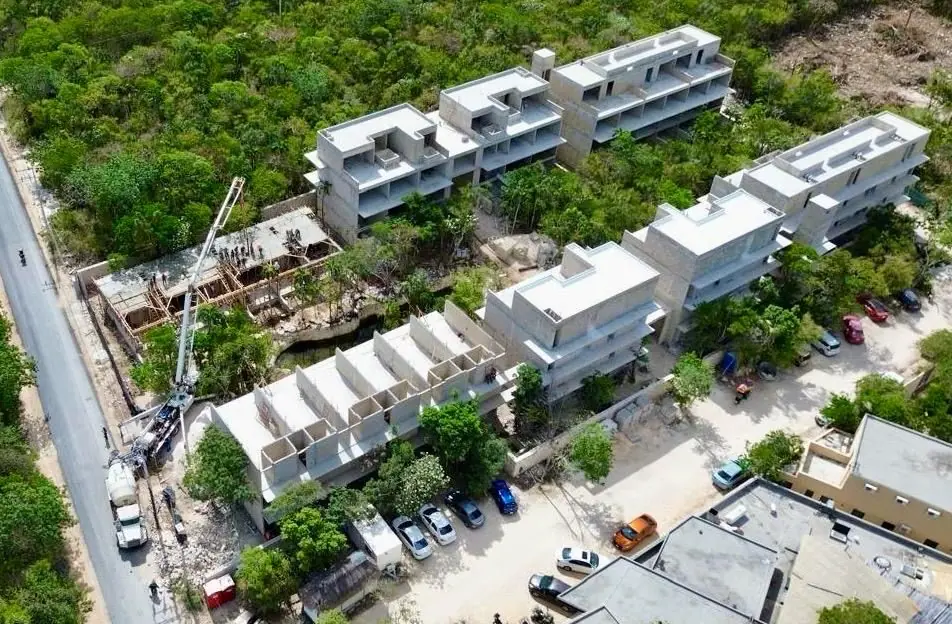
First: stop paying, then document
Stop all payments immediately, including any that are scheduled automatically. Then document what exists, before anything is moved, cleaned or continued: dated photographs of every area, a written inventory of materials on site, and copies of the contract, every payment receipt, the approved drawings and all correspondence. If a claim ever follows, this is the evidence, and it stops existing the moment someone starts working again. Do this even if you are certain you will never litigate — most owners are, and some of them are wrong.
Second: secure the site
An unattended site in this region loses materials, tools and sometimes installed fixtures within weeks. Change the locks, secure the perimeter, arrange somebody to check it, and photograph the inventory before you do. If services are connected, shut off water and gas. If there is an open excavation or an unfinished structure, the site is also a liability — the owner is the one who carries that, not the builder who left.
Third: find out what is actually built
This is the part that decides the budget. A technical audit compares what exists against what was paid for and against the approved drawings, and it tests what cannot be seen. Concrete strength can be tested in place. Reinforcement can be located and its cover measured without full demolition. Levels, verticality and dimensions can be checked against the plans. Embedded plumbing can be pressure-tested. What cannot be verified any other way — reinforcement detail inside a poured element, or services already buried — sometimes has to be opened in a small, chosen location. Owners resist that, and it is almost always cheaper than assuming.
| Stage | What happens | Typical cost |
|---|---|---|
| Technical audit and report | Site survey, testing, comparison to drawings | $25,000 – $80,000 MXN |
| Permit and DRO regularisation | Renewal, new DRO, documentation | Per municipality |
| Completion works | Line-item budget for what remains | Quoted after audit |
| Corrective works | Fixing what was built wrong | Separate line items |
| Takeover premium | Unknowns, coordination, risk | Typically 10% – 25% over new-build rates |
Fourth: check whether the permit is still alive
A municipal construction licence has a validity period. A project stopped for a long stretch may need it renewed or the situation regularised before work can legally restart, and the municipality may want to see why the work stopped. Separately, the DRO who signed the file may have resigned from the project. A new DRO takes on responsibility for the whole thing, which means they will want testing and documentation before signing — reasonably so. Sorting the permit is not optional paperwork; restarting without it turns a construction problem into an administrative one.
What it costs, and why it is not the same rate as new work
Completion always costs less in absolute terms than the whole house, and more per square metre than the same work would have cost in a clean sequence. The reasons are real: unknown hidden work, materials and specifications chosen by someone else, coordination around what already exists, and the risk of later being blamed for defects that were built before we arrived. Any builder who quotes a takeover at their normal rate without an audit is either guessing or planning to renegotiate later.
The warranty question, answered honestly
We warrant our own work in full. We cannot warrant a structure someone else poured without verifying it, and verification has limits — some of it requires opening things up, and some of it can only be assessed rather than proven. What we do is state, in writing and before starting, exactly which elements are covered, which have been tested and accepted, and which remain outside the warranty. That document is worth more to you than a broad promise from anyone willing to give one.
Related pages: Concierge construction service · Managing a build from abroad · Technical inspection before buying · General contractor in the Riviera Maya
Frequently Asked Questions
Planning a project on this coast?
196+ completed projects. Fixed-price contracts. Reply in 2 minutes.
Ask on WhatsApp