Complete House Renovation in Playa del Carmen: Before & After Guide
Updated August 2026 • By Recrea Construction • 6 min read
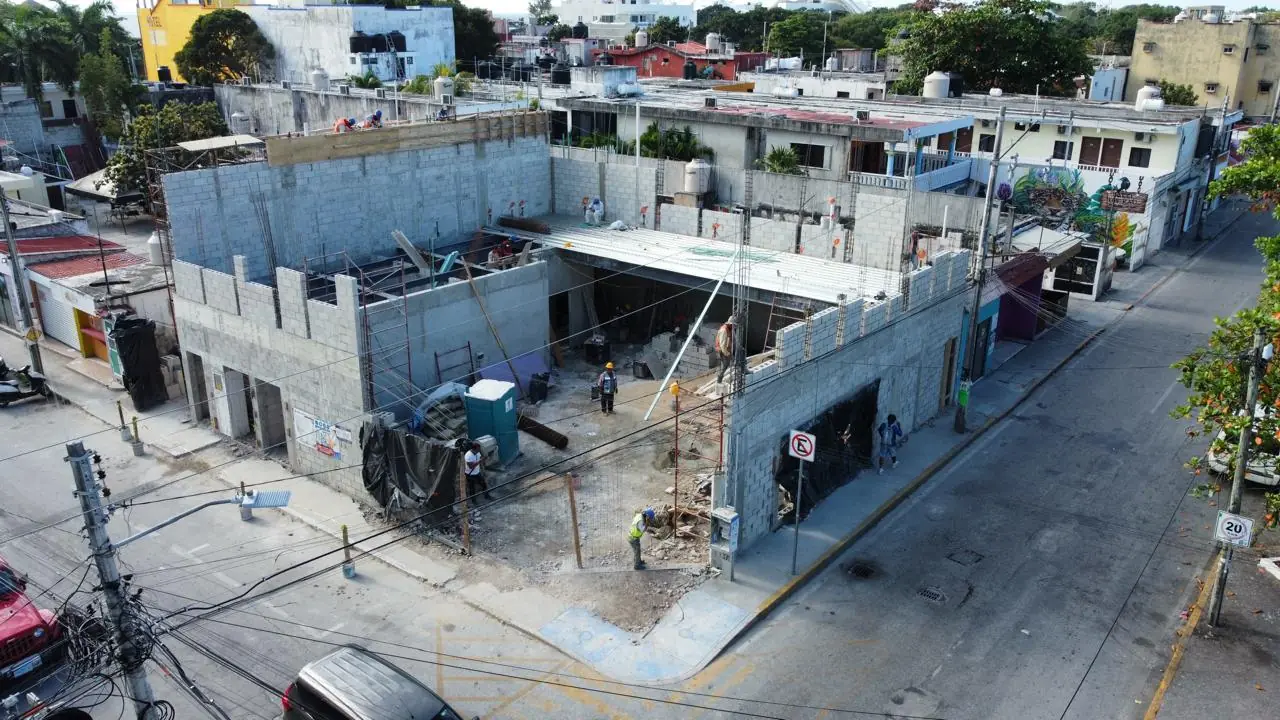
A complete renovation is the highest-variance work we do. A new build on a clean lot is largely predictable; opening up a twenty-year-old house in Playa del Carmen is not, because the cost is determined by conditions nobody can see until demolition starts. The houses that come in on budget are the ones that were surveyed properly first, and the ones that overrun are almost always the ones priced from a walk-through.
This covers what to survey and why, which systems should be replaced rather than extended, when renovation stops making sense against rebuilding, what permits a renovation needs, and realistic costs and programme for a full refurbishment.
Survey Before You Price
Spend money on investigation before you spend it on drawings. On a house of fifteen years or more in this climate, these are the findings that move the budget:
- Structural condition, especially exposed concrete. Slab edges, balconies, columns, parapets and roof beams. Chloride-induced reinforcement corrosion is the standard defect on this coast, and repairing it properly — cutting back beyond the corroded steel, treating or replacing reinforcement, repair mortar and protection — is a different order of cost from a cosmetic patch.
- Roof waterproofing, which usually has a service life shorter than the owner assumes. Assume replacement rather than repair unless there is evidence otherwise.
- Electrical installation. Older houses here frequently have no proper grounding, no GFCI protection in wet areas, undersized panels with no spare capacity, and cable buried in plaster without conduit. That combination is not extendable — it is replaceable.
- Plumbing and drainage. Original galvanised pipework corrodes internally; hard water accelerates it. Drainage falls and vent arrangements in older houses are often improvised. Camera the drains and pressure-test the supply before pricing.
- Termite and moisture damage in any timber — roof structure, joinery, decks — and in the substrate behind wet-area tiling.
- Pool structure and plant, if there is one: shell condition, the state of the plumbing rings, and whether the equipment is worth keeping.
- Windows and doors: frame corrosion, glazing type, and whether the openings are square enough to accept new units without rebuilding the reveals.
- Legacy materials. In older buildings, test before demolition rather than during.
A proper survey with opening-up of representative areas costs a fraction of a percent of the project and is the difference between a fixed price that holds and a series of change orders.
Replace, Don't Extend — and Know When to Rebuild
The systems to replace wholesale in a full renovation: the electrical installation (new conduit, circuits, panel, grounding, GFCI), the water supply pipework, the wet-area waterproofing, and the roof membrane. Extending any of these is a false economy — you inherit the failure mode and then finish over it. Everything else — structure, openings, joinery, finishes — can genuinely be assessed on merit.
When to stop renovating and rebuild instead. The honest thresholds:
- Structural repair exceeds roughly 25–30% of a rebuild's cost. At that point you are paying new-build money for an old building's geometry and performance.
- The plan is fundamentally wrong for how the house will be used — bad orientation, no cross-ventilation, rooms in the wrong places — and fixing it means moving most of the walls anyway.
- Ceiling heights are low and cannot be changed. This is the constraint that most often makes an otherwise sound old house not worth renovating in this climate.
- You want to add a storey and the existing foundations and columns were not designed for it. Strengthening from below is disruptive, expensive and occasionally not viable.
- CUS headroom exists and the location is valuable. If the lot permits substantially more built area than the existing house uses, rebuilding may produce a far better asset for a modest premium over renovating.
Against that, renovation wins where the structure is sound, the plan works, the ceiling heights are generous, and the location is one where you could not buy the equivalent lot today — which describes a lot of central Playa del Carmen and Playacar.
Get a Free Quote in 2 Minutes
Tell us about your project — we respond via WhatsApp faster than any builder in the Riviera Maya
Permits, Programme and Cost
Permits. Cosmetic work generally does not require a licence, but anything structural, any change to the facade, any increase in built area, and any new services connection does — with a DRO where the scope requires one. In a condominium, the regime and bylaws govern as well, and works affecting common elements or the building envelope usually need an assembly resolution. The practical advice is to establish the permit position before demolition: stopping a live renovation to regularise it is expensive, and neighbours in this market do report unpermitted work.
| Scope | MXN/m² | USD/m² |
|---|---|---|
| Cosmetic: paint, some finishes, fittings | $2,500–$6,000 | $139–$335 |
| Standard renovation: kitchen, bathrooms, floors, electrical and plumbing renewed | $8,000–$16,000 | $445–$890 |
| Complete renovation: layout changes, all systems, all finishes, joinery | $14,000–$26,000 | $780–$1,445 |
| Complete renovation to premium specification | $26,000–$40,000 | $1,445–$2,225 |
| Structural concrete repair programme | Priced separately after survey | — |
| Roof waterproofing replacement | $900–$2,500 per m² | — |
Programme: three to five months for a standard renovation, five to nine for a complete one with layout changes, longer if structural repair or permits extend. Contingency: 15–20% on a full renovation even after a good survey — not because the survey was poor, but because you cannot open every element before contract.
One recommendation from experience: live somewhere else. Phased renovation of an occupied house costs more, takes considerably longer, and produces a worse result, because the trades never get clear access and everything is done twice. If the house must stay occupied, phase by zone with sealed boundaries and accept the premium consciously rather than discovering it.
Frequently Asked Questions
We Build Across the Riviera Maya
Playa del Carmen
Our home base since 2008. Playacar, Centro, Ejidal, Colosio, Coralina — we know every colonia and every permit office.
Tulum & Aldea Zamá
Eco-builds, boutique hotels, jungle villas. Full SEMA/SEMARNAT permit handling. Eco-regulation experts.
Puerto Aventuras
Marina-front villas, canal homes, gated community construction & renovation since 2010.
Cancún & Hotel Zone
Commercial builds, restaurant fit-outs, condo renovations in Zona Hotelera and residential zones.
Akumal & Puerto Morelos
Beachfront construction, eco-resorts, residential builds in protected coastal zones.
Bacalar & Felipe Carrillo Puerto
Emerging market — boutique hotels, eco-lodges on the Lagoon of Seven Colors.
Ready to Start Your Project?
196+ projects completed. Fixed-price contracts. Free detailed estimate within 48 hours.
Get Free QuoteWhy Build with Recrea
- 196+ projects completed across the Riviera Maya — Playa del Carmen, Tulum, Puerto Aventuras, Cancún, Akumal, Bacalar since 2008
- Fixed-price contracts — itemized budget, no surprises, penalty clauses for delays
- All services in-house — architecture, permits, construction, electrical, plumbing, carpentry, metalwork, pool
- Bilingual team — English/Spanish/German communication with weekly photo and video reports
- 100% permit approval rate — land use, SEMA, construction license, civil protection, all inspections
- 14 rescued projects — we've taken over and completed projects abandoned by other builders
- 1-year structural warranty — we stand behind our work with written guarantees