Building a Retirement Home in Mexico: Riviera Maya Guide 2026
Updated July 2026 • By Recrea Construction • 6 min read
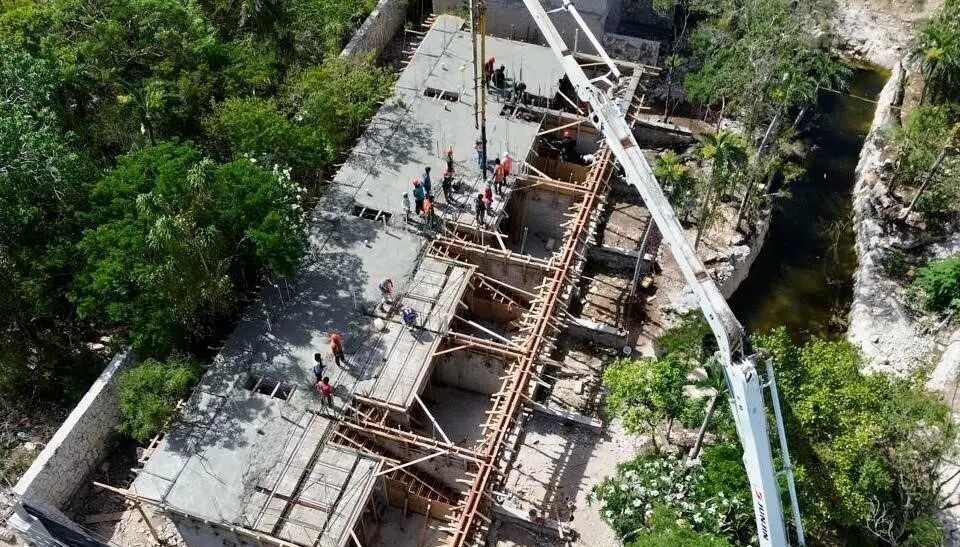
Retirement buyers ask different questions than investors, and they should be designed for differently. The house has to work at seventy-five as well as at sixty, which means single-level living, step-free thresholds and doorways wide enough for a walker long before anyone needs one. It has to be cheap and simple to run, because a fixed income does not absorb a surprise. And its location matters for reasons that have nothing to do with rental yield — hospital access, walkability, community, and how easy it is for family to visit.
This covers the plan decisions that matter for ageing in place, the location trade-offs across the corridor, what ownership and residency involve for a foreign retiree, and honest running costs.
Design for the Next Twenty-Five Years
Almost everything on this list costs little or nothing at design stage and a great deal to retrofit.
- Single level. One storey plus, if you want a view, a roof terrace reached by a comfortable stair with a landing — not a house whose bedrooms are upstairs.
- Step-free throughout. Flush thresholds at every external door (with a channel drain and a slope away, so driven rain stays outside), no changes of level between rooms, and a gently ramped rather than stepped approach from the street and the carport.
- Door and corridor widths sized for a wheelchair or walker — 90 cm doors, generous turning space in bathrooms and the kitchen. Nobody has ever regretted a wide doorway.
- Bathrooms designed once, properly: a curbless walk-in shower with a linear drain, blocking in the walls for future grab rails even if you fit none now, a comfort-height WC, a lever tap, and enough clear floor to assist someone.
- Lighting and surfaces. Generous, even light with no dark transitions, switches at reachable heights, and floor finishes with real slip resistance when wet — polished porcelain around a pool is a hazard.
- A ground-floor guest or carer room with its own bathroom. It is a guest room for twenty years and the most important room in the house for the last five.
- Shade and a covered terrace, because outdoor living at midday is only possible in shade, and this is where you will actually spend your days.
- Low-maintenance everything: porcelain rather than natural stone that needs sealing, aluminium rather than timber joinery outside, native and drought-tolerant planting, and a pool sized for swimming rather than for photographs.
Where to Retire in the Corridor
The trade-offs are real and they differ from what an investor would choose.
| Location | For a retiree | Against |
|---|---|---|
| Playa del Carmen | Best hospital and specialist access in the corridor, walkable centre, large expat community, direct airport road | Busy, noisier, land prices in central and gated areas |
| Puerto Aventuras | Gated, very calm, walkable, services inside the community, strong resident community | HOA fees, limited land, car needed for anything beyond the gates |
| Puerto Morelos | Quiet village character, closest to Cancún airport and its hospitals, gentler pace | Fewer services in the village itself |
| Akumal | Beautiful, small, strong community | Tulum municipality permitting, thinner medical access, more driving |
| Tulum | Setting and character | Traffic, construction noise, longer hospital access, permitting complexity — the least practical retirement choice in the corridor |
| Bacalar | Exceptional lagoon setting, low cost of living | 3.5–4 h from the corridor's hospitals and supply chain |
The item retirees consistently under-weight at purchase and over-weight five years later is proximity to healthcare. Playa del Carmen and Cancún have the hospitals and specialists; everywhere else means a drive. If you have an existing condition, treat drive time to a hospital as a hard design constraint on location, not a preference.
Get a Free Quote in 2 Minutes
Tell us about your project — we respond via WhatsApp faster than any builder in the Riviera Maya
Ownership, Residency and Running Costs
Ownership. In the restricted zone within 50 km of the coast, foreigners hold residential property through a bank trust (fideicomiso) or a Mexican company. The fideicomiso is the normal route for a home: the bank holds title as trustee, you hold all beneficial rights — use, rent, sell, bequeath — for a renewable term, and it carries a setup cost and an annual bank fee. It is well-established, it is what the great majority of foreign-owned homes here sit in, and a notary (notario) handles the closing.
Residency. Temporary and permanent residency are available through routes including proven income or savings thresholds, and the thresholds are set against Mexican minimum-wage units and change, so verify current figures with a consulate or an immigration lawyer. Residency matters practically: it simplifies banking, vehicle ownership and importing household goods, and permanent residency is a common goal for retirees who intend to stay.
Healthcare. Private care here is good and inexpensive by US standards, and most retirees carry private insurance — either an international policy or a Mexican one, with the important caveat that Mexican insurers commonly restrict new enrolment above certain ages and exclude pre-existing conditions. Sort insurance out before you move, not after.
| Annual running cost | MXN/year |
|---|---|
| Property tax (predial) — modest by US/Canadian standards | $3,000–$20,000 |
| Fideicomiso annual bank fee | $8,000–$20,000 |
| Electricity with moderate AC use | $18,000–$60,000 |
| Water, gas, internet | $12,000–$30,000 |
| Pool and garden service | $24,000–$72,000 |
| House insurance (coastal, incl. hurricane cover) | $15,000–$60,000 |
| Maintenance reserve | 1–2% of build cost |
| HOA, if in a gated community | Varies widely — verify per property |
Two decisions cut those numbers meaningfully: a house designed to be comfortable without air conditioning for most of the year, and solar. In a retirement house, where you are home all day and the CFE consumption threshold that triggers the expensive DAC tariff is easy to cross, solar frequently pays back in three to five years.
Frequently Asked Questions
We Build Across the Riviera Maya
Playa del Carmen
Our home base since 2008. Playacar, Centro, Ejidal, Colosio, Coralina — we know every colonia and every permit office.
Tulum & Aldea Zamá
Eco-builds, boutique hotels, jungle villas. Full SEMA/SEMARNAT permit handling. Eco-regulation experts.
Puerto Aventuras
Marina-front villas, canal homes, gated community construction & renovation since 2010.
Cancún & Hotel Zone
Commercial builds, restaurant fit-outs, condo renovations in Zona Hotelera and residential zones.
Akumal & Puerto Morelos
Beachfront construction, eco-resorts, residential builds in protected coastal zones.
Bacalar & Felipe Carrillo Puerto
Emerging market — boutique hotels, eco-lodges on the Lagoon of Seven Colors.
Ready to Start Your Project?
196+ projects completed. Fixed-price contracts. Free detailed estimate within 48 hours.
Get Free QuoteWhy Build with Recrea
- 196+ projects completed across the Riviera Maya — Playa del Carmen, Tulum, Puerto Aventuras, Cancún, Akumal, Bacalar since 2008
- Fixed-price contracts — itemized budget, no surprises, penalty clauses for delays
- All services in-house — architecture, permits, construction, electrical, plumbing, carpentry, metalwork, pool
- Bilingual team — English/Spanish/German communication with weekly photo and video reports
- 100% permit approval rate — land use, SEMA, construction license, civil protection, all inspections
- 14 rescued projects — we've taken over and completed projects abandoned by other builders
- 1-year structural warranty — we stand behind our work with written guarantees