Warehouse Construction in the Riviera Maya: Industrial Build Guide
Updated July 2026 • By Recrea Construction • 6 min read
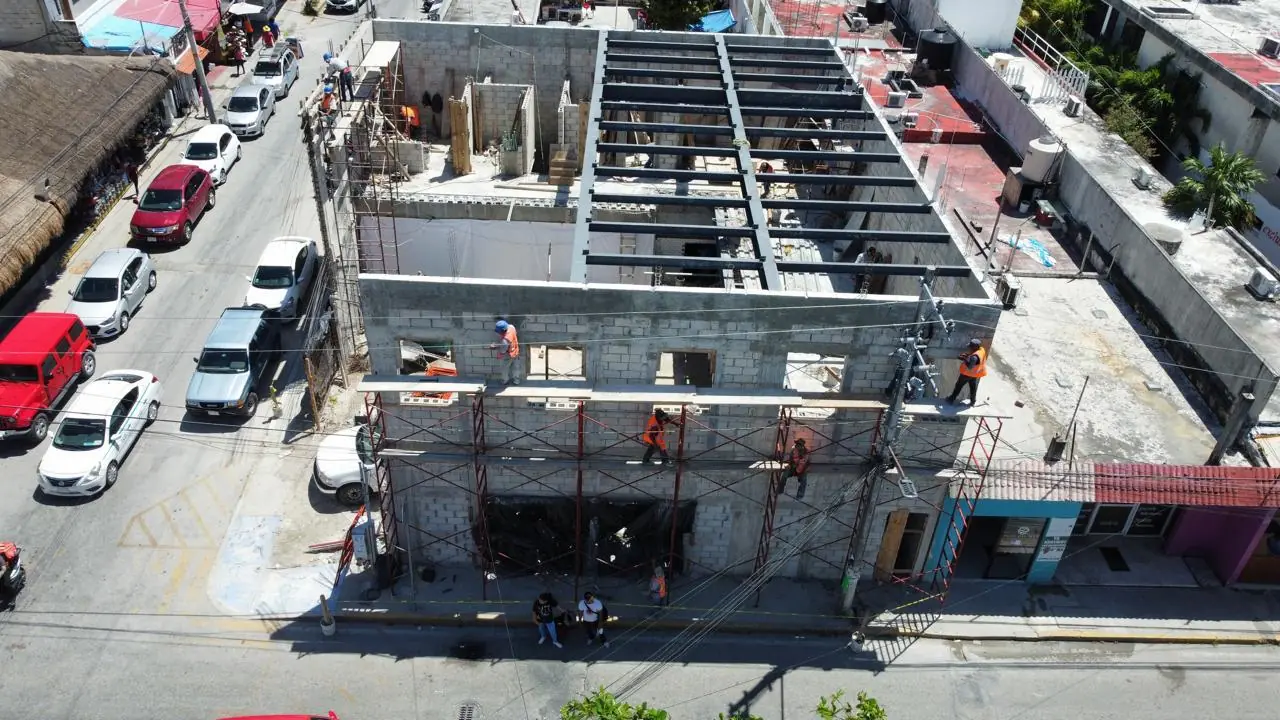
Warehouse demand in the corridor is driven by things people do not associate with the Riviera Maya: supplying hotels and restaurants, cold chain for food distribution, construction materials, boat and equipment storage, last-mile logistics for a population that has grown fast, and self-storage for a transient residential market. The buildings themselves are the most standardised product we build — and the specification decisions that matter are unglamorous.
This covers where you are allowed to build one, how the structure and the slab should be specified, the hurricane detail that decides whether the roof stays on, and what a warehouse costs per square metre in 2026.
Services: Structural Steel · Steel Roofs & Canopies · Mezzanines & Floor Additions · Steel Frame Homes · Architectural Metalwork · Corrosion Protection & Repair
Where You Can Build, and Site Selection
- Industrial land use is specific and limited. Each municipality designates industrial and mixed light-industrial zones, and a warehouse in the wrong classification is not permittable regardless of how the building looks. Verify the classification for the exact lot before purchase, and confirm which activities are permitted — storage, light manufacturing, food handling and vehicle-related uses are not interchangeable.
- Access and turning circles. A building that cannot receive the vehicles it is designed for is worthless. Check the approach road width and surface, any weight or height restrictions on the route, and whether a full-size articulated vehicle can enter, manoeuvre and leave. Design the yard around the largest vehicle, not the average one.
- Electricity. Cold storage, workshop equipment and battery charging are substantial loads. Confirm available capacity at the lot and price any CFE extension or transformer before committing — on industrial land away from existing service this is one of the largest single variables in the budget.
- Water, drainage and fire. Sprinklers where required bring water storage and pump requirements that dominate the site services. Wastewater needs treatment where no sewer serves the area.
- Ground conditions. The karst limestone here usually gives good shallow bearing, which suits pad foundations — but cavities must be found before they are built over, and a large floor slab makes that a bigger investigation than a house needs.
- Flood level. Set the floor slab above plausible flooding. A warehouse floor 20 cm too low is an insurance conversation every few years.
Structure, Slab and the Hurricane Detail
Structure. A steel portal frame is the default for spans beyond about 12 m, with either a metal deck roof or insulated sandwich panel where the contents need thermal control. Clear span, eaves height and crane provision are the three decisions that set the frame:
- Clear span: pick it from the racking layout, not from a round number. Columns in the wrong place cost storage capacity forever.
- Eaves height: racking height plus sprinkler and lighting zone plus clearance. Adding height at design stage is cheap; adding it later is a new building.
- Crane or hoist provision changes the frame entirely — decide before the steel is designed.
- Corrosion protection by exposure: inland and internal, zinc-rich primer plus epoxy; within a few kilometres of the coast, galvanising or a full three-coat system; near the shore, galvanised plus a duplex paint system, with connections and site welds properly treated.
The slab is where warehouses are won and lost. It carries racking point loads, forklift wheel loads and impact, and it has to stay flat. Specify the loading in kN/m² and the racking leg loads before design; get a proper sub-base and compaction; design the joint layout and dowel it rather than letting joints crack where they will; specify a surface finish and flatness tolerance appropriate to the equipment; and seal or harden it. A cheap slab cracks, spalls at the joints, and then damages equipment and inventory for the building's life. It is the last place to save money.
Get a Free Quote in 2 Minutes
Tell us about your project — we respond via WhatsApp faster than any builder in the Riviera Maya
Costs and Specialised Variants
| Scope | MXN/m² | USD/m² |
|---|---|---|
| Basic shell: portal frame, metal roof and walls, industrial slab | $4,500–$8,500 | $250–$470 |
| Insulated shell: sandwich panel roof and walls | $7,000–$13,000 | $390–$720 |
| With office and WC module (typically 5–15% of area) | $14,000–$24,000 on that area | — |
| Cold storage chamber, insulated panel and plant | $18,000–$38,000 | $1,000–$2,110 |
| Yard, paving, drainage, fencing and gates | $1,200–$3,500 per m² of yard | — |
| Sprinkler system with tank and pump | $1,500–$4,000 per m² of building | — |
| Foundations (karst, separate from the above) | Site specific — soil study first | — |
Cold storage deserves particular care here. Insulated panel continuity, vapour control, floor insulation, door detailing and redundancy in the refrigeration plant all matter, and so does backup power — a wet-season outage in a full cold room is an expensive afternoon. Self-storage is a different building again: a simple envelope subdivided into many small units, where the economics are in unit mix, corridor efficiency, access control and climate control rather than in span.
Compliance. Warehouses carry the commercial layer: Civil Protection with egress, occupancy and fire provisions; NOM-compliant electrical with verification; accessibility in the office areas; and environmental requirements for anything stored that needs containment. On the operational side, insurers increasingly ask about wind-rated doors, roof fixing specification and flood level — which is one more reason to specify them properly rather than at minimum.
Frequently Asked Questions
We Build Across the Riviera Maya
Playa del Carmen
Our home base since 2008. Playacar, Centro, Ejidal, Colosio, Coralina — we know every colonia and every permit office.
Tulum & Aldea Zamá
Eco-builds, boutique hotels, jungle villas. Full SEMA/SEMARNAT permit handling. Eco-regulation experts.
Puerto Aventuras
Marina-front villas, canal homes, gated community construction & renovation since 2010.
Cancún & Hotel Zone
Commercial builds, restaurant fit-outs, condo renovations in Zona Hotelera and residential zones.
Akumal & Puerto Morelos
Beachfront construction, eco-resorts, residential builds in protected coastal zones.
Bacalar & Felipe Carrillo Puerto
Emerging market — boutique hotels, eco-lodges on the Lagoon of Seven Colors.
Ready to Start Your Project?
196+ projects completed. Fixed-price contracts. Free detailed estimate within 48 hours.
Get Free QuoteWhy Build with Recrea
- 196+ projects completed across the Riviera Maya — Playa del Carmen, Tulum, Puerto Aventuras, Cancún, Akumal, Bacalar since 2008
- Fixed-price contracts — itemized budget, no surprises, penalty clauses for delays
- All services in-house — architecture, permits, construction, electrical, plumbing, carpentry, metalwork, pool
- Bilingual team — English/Spanish/German communication with weekly photo and video reports
- 100% permit approval rate — land use, SEMA, construction license, civil protection, all inspections
- 14 rescued projects — we've taken over and completed projects abandoned by other builders
- 1-year structural warranty — we stand behind our work with written guarantees