Hotel Renovation in Cancún Zona Hotelera: Modernization Guide
Updated August 2026 • By Recrea Construction • 6 min read
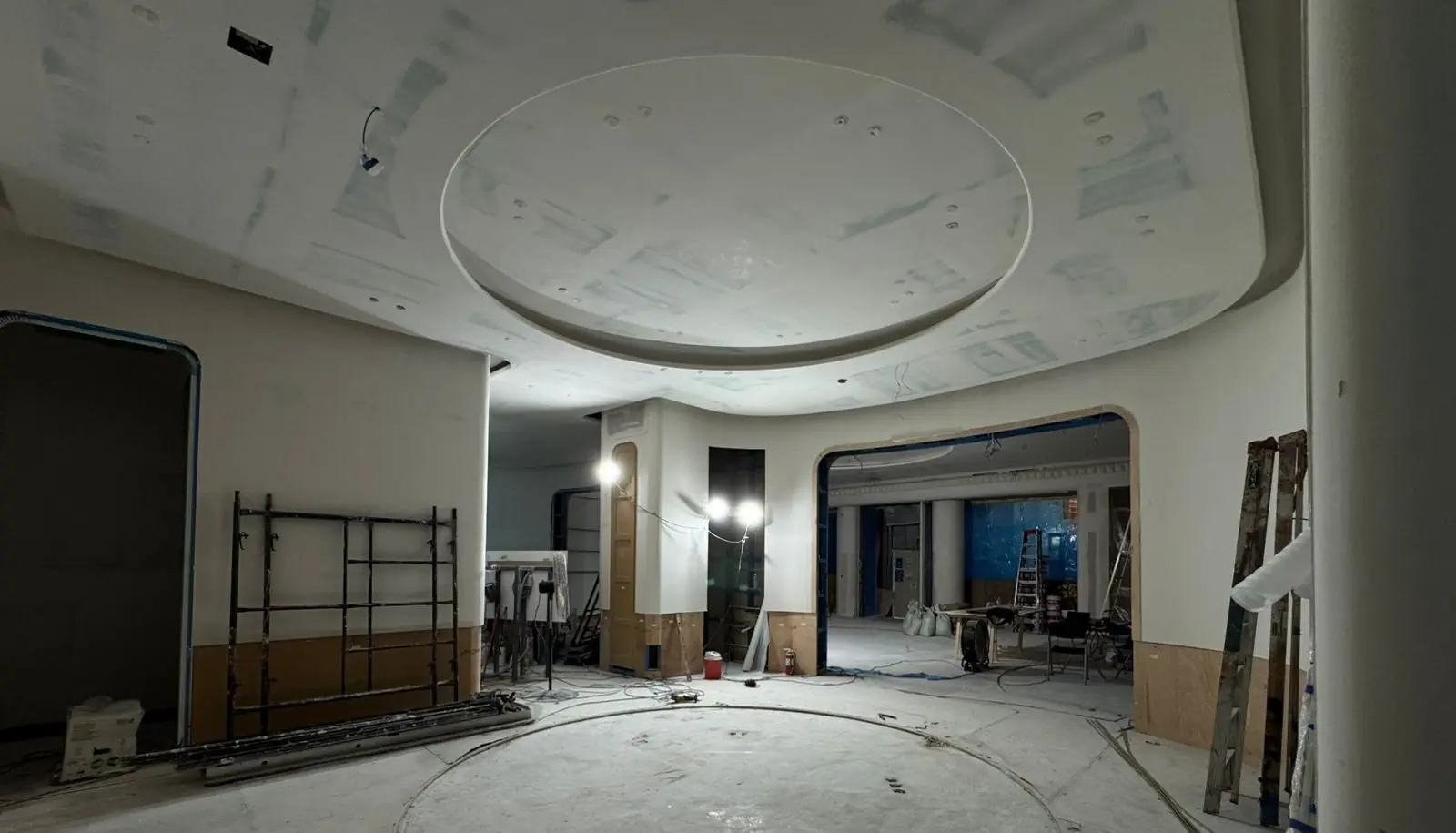
Cancún's Hotel Zone is built out. The strip of land between the lagoon and the sea has essentially no developable sites left, the remaining land is expensive and held by large operators, and consequently the work here is renovation: reconversion of tired properties, full refurbishment of rooms and public areas, and the structural repair that thirty or forty years of Caribbean exposure eventually forces.
Hotel renovation is a different discipline from hotel construction. The building is usually operating, the programme is dictated by the low season, the condition of the existing structure is only partly knowable before you open it, and every decision is measured against room-nights lost. This covers how to phase it, what the concrete is likely to look like when you get into it, and what it costs per key.
Renovating While Open
Almost every Hotel Zone refurbishment happens around guests, and the discipline of that is most of the project management.
- Phase by vertical stack or by floor, not by scattered rooms. A contiguous zone can be isolated, given its own access and services shut-off, and dust-sealed; scattered rooms mean noise and dust everywhere and no clean separation.
- Work to the low season. In this market that means the September–November window, which is also hurricane season — so the programme has to absorb weather risk and the building has to be weathertight at each stage boundary, not mid-demolition when a storm is named.
- Separate everything: construction access, service lifts, waste routes, and worker facilities entirely apart from guest circulation. Guests should not see, hear or smell the work, and in practice that means hoarding, negative-pressure dust control at the boundary, and a strict rule about which lift is which.
- Noise windows agreed in writing with the operator, and understood as immovable. Demolition and core drilling in a hotel with occupied rooms two floors below happens in defined hours or it produces refunds.
- Shut-downs planned, not improvised. Water, power and drainage isolations need to be mapped against the operating building — older hotels frequently have no isolation valves where the drawings say they do, which is worth discovering during survey rather than at midnight.
- A mock-up room, always. Build one complete room, have the operator and the designer sign it off, resolve every detail in it, and then repeat it. On a 300-key refurbishment the mock-up pays for itself several times over.
What You Find When You Open a 30-Year-Old Building
Chloride-induced corrosion is the defining condition of older Hotel Zone buildings. Salt has been migrating through the concrete cover for decades; where cover was thin or the concrete permeable, the reinforcement is corroding and the expanding product spalls the concrete. It shows first at balcony slab edges, on exposed columns and beams, at parapets and around embedded metalwork.
- Survey before you price. Cover meter readings, carbonation and chloride testing, half-cell potential mapping where warranted, and opening up representative areas. This is the single most important pre-contract activity, and the most commonly skipped.
- Repair properly or repeat it. Correct concrete repair means cutting back to sound material beyond the corroded zone, cleaning or replacing reinforcement, applying a compatible repair mortar, and then protecting the element — coatings, or in significant cases cathodic protection. Patching over corroded steel guarantees the repair fails, usually within a few years.
- Balconies are the priority. They are the most exposed elements, they carry people, and they are where structural risk concentrates in these buildings.
- Waterproofing is likely at end of life on roofs, terraces and bathrooms — and bathroom leaks through slabs into rooms below are a recurring operational cost that a refurbishment should eliminate rather than decorate over.
- MEP is usually the real scope. Original galvanised pipework, undersized electrical capacity for modern room loads, obsolete AC plant, and drainage stacks at the end of their life. Replacing risers and stacks is disruptive, hard to phase and easy to underestimate — and it is what makes the difference between a refurbishment that lasts fifteen years and one that looks new for three.
- Asbestos and legacy materials can be present in buildings of this age; test before demolition rather than during it.
Get a Free Quote in 2 Minutes
Tell us about your project — we respond via WhatsApp faster than any builder in the Riviera Maya
Scope, Compliance and Cost Per Key
| Scope | MXN per key | USD per key |
|---|---|---|
| Soft refurbishment: FF&E, paint, textiles, light bathroom work | $120,000–$350,000 | $6,700–$19,400 |
| Full room renovation: bathroom replaced, MEP in room, joinery, finishes | $350,000–$900,000 | $19,400–$50,000 |
| Reconversion / repositioning to a higher segment | $900,000–$2,200,000 | $50,000–$122,000 |
| Structural concrete repair programme | $150,000–$700,000 per key equivalent | — |
| Riser and stack replacement (building-wide) | Price separately — the largest phasing risk | — |
| Public areas: lobby, restaurants, pool deck, spa | $15,000–$45,000 per m² | — |
Compliance on refurbishment is where operators sometimes hope the rules will not reopen. They usually do: a change of use or a significant alteration brings the current Civil Protection requirements into scope — egress, emergency lighting, detection and alarm, extinguishers, evacuation planning — along with current accessibility obligations, NOM-compliant electrical for anything reworked, and health requirements for food-and-beverage areas. On a repositioning project it is better to budget for bringing the whole property up to current requirements than to discover them selectively during inspections.
Two specification decisions worth funding properly in this location. Glazing: laminated or impact-rated units on exposed elevations, which simultaneously cut the cooling load that dominates the operating bill and keep the envelope intact in a storm. And the marine specification on everything replaced — 316 stainless for fixings, railings and pool hardware, anodised or marine-grade coated aluminium for glazing and screens, coated coils on condensers. A refurbishment that reinstates 304 stainless and standard powder coat in this exposure is a refurbishment that will be needed again far sooner than the finance model assumes.
Frequently Asked Questions
We Build Across the Riviera Maya
Playa del Carmen
Our home base since 2008. Playacar, Centro, Ejidal, Colosio, Coralina — we know every colonia and every permit office.
Tulum & Aldea Zamá
Eco-builds, boutique hotels, jungle villas. Full SEMA/SEMARNAT permit handling. Eco-regulation experts.
Puerto Aventuras
Marina-front villas, canal homes, gated community construction & renovation since 2010.
Cancún & Hotel Zone
Commercial builds, restaurant fit-outs, condo renovations in Zona Hotelera and residential zones.
Akumal & Puerto Morelos
Beachfront construction, eco-resorts, residential builds in protected coastal zones.
Bacalar & Felipe Carrillo Puerto
Emerging market — boutique hotels, eco-lodges on the Lagoon of Seven Colors.
Ready to Start Your Project?
196+ projects completed. Fixed-price contracts. Free detailed estimate within 48 hours.
Get Free QuoteWhy Build with Recrea
- 196+ projects completed across the Riviera Maya — Playa del Carmen, Tulum, Puerto Aventuras, Cancún, Akumal, Bacalar since 2008
- Fixed-price contracts — itemized budget, no surprises, penalty clauses for delays
- All services in-house — architecture, permits, construction, electrical, plumbing, carpentry, metalwork, pool
- Bilingual team — English/Spanish/German communication with weekly photo and video reports
- 100% permit approval rate — land use, SEMA, construction license, civil protection, all inspections
- 14 rescued projects — we've taken over and completed projects abandoned by other builders
- 1-year structural warranty — we stand behind our work with written guarantees