Foundations on Beach Sand: Mats, Piles, Dunes and Mangroves
Away from the limestone ridge, beachfront lots in Tulum, Puerto Morelos, Mahahual and Costa Mujeres sit on loose sand with a shallow, salty water table. The foundation choice, and what you leave untouched in front of the house, decides how it behaves in the next hurricane.
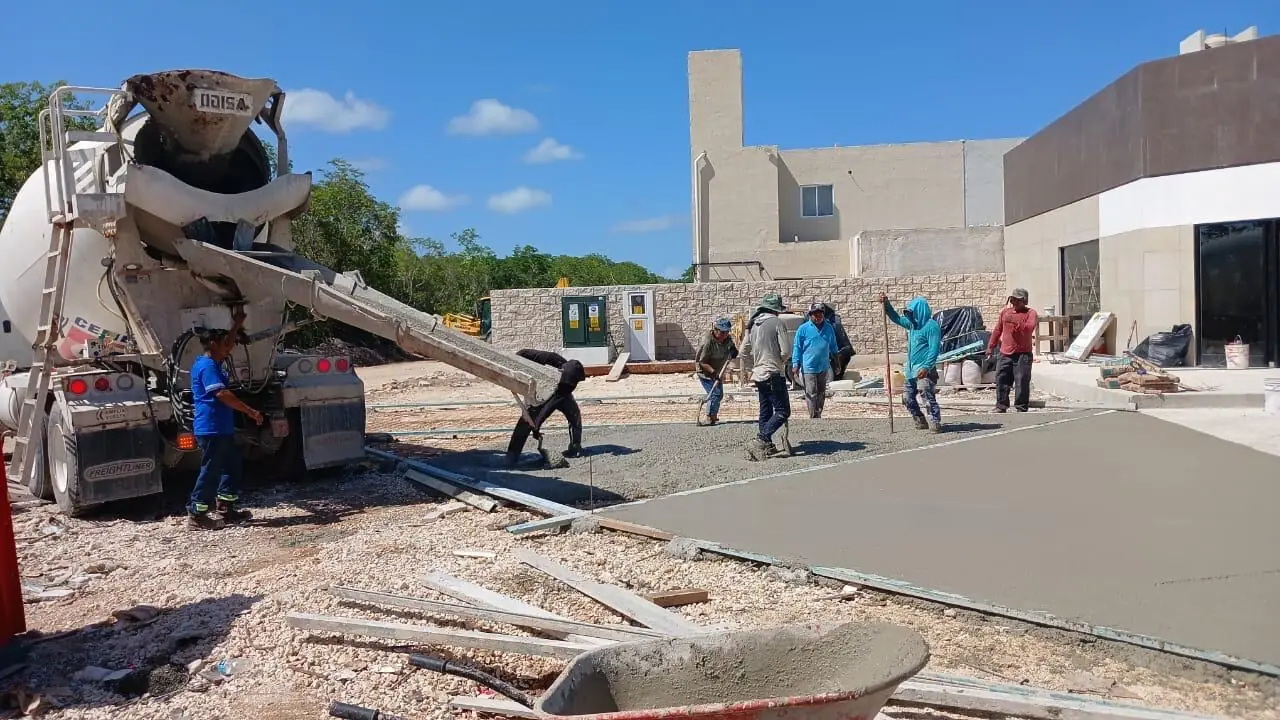
Related: Stormwater and Flooding on a Lot in the Riviera Maya · Water Filtration for a House in the Riviera Maya
1. What the soil study must tell you
- Depth of loose sand and of competent rock or cemented layer.
- Water table depth and salinity (affects concrete specification).
- Bearing capacity and expected settlement.
- Erosion history of the beach.
See soil study.
2. Foundation options
| Option | When | Cost (MXN, 2026) |
|---|---|---|
| Mat (raft) foundation on compacted sand | Rock deep, light buildings, low scour risk | $1,800–$3,200 per m² of footprint |
| Footings on improved/compacted fill | Shallow rock, moderate loads | Lower; depends on fill |
| Bored or driven piles to rock | First line, hotels, scour risk, loose sand deep | $4,500–$9,000 per linear metre of pile |
| Micropiles | Limited access, retrofits | $3,500–$7,000 per linear metre |
3. Dunes and the beach
- Build behind the dune, don't level it: the dune is the first hurricane defence.
- Elevated walkways over the dune instead of cutting paths.
- Keep the federal strip (ZOFEMAT) free of permanent works.
- Turtle-friendly lighting on the beach façade.
4. Mangroves
Mangroves are strictly protected in Mexico; removing or filling them is generally prohibited, and lots that contain mangrove have reduced buildable area and federal environmental review. See environmental impact assessment.
5. Concrete near salt water
Sulphate- and chloride-resistant concrete, higher cover and waterproofing of buried elements; see concrete types.
FAQ
Ready to Start Your Project?
196+ completed projects. Fixed-price contracts. Free quote within 48 hours.
Get Free Quote