Gas station construction and refurbishment in Cozumel
Double-wall tanks, forecourt, canopy and the CRE-ASEA file with a single contractor.
On Cozumel fuel arrives by sea and that changes everything: storage capacity is not sized by daily sales but by the interval between shipments and by the chance that bad weather stretches it.
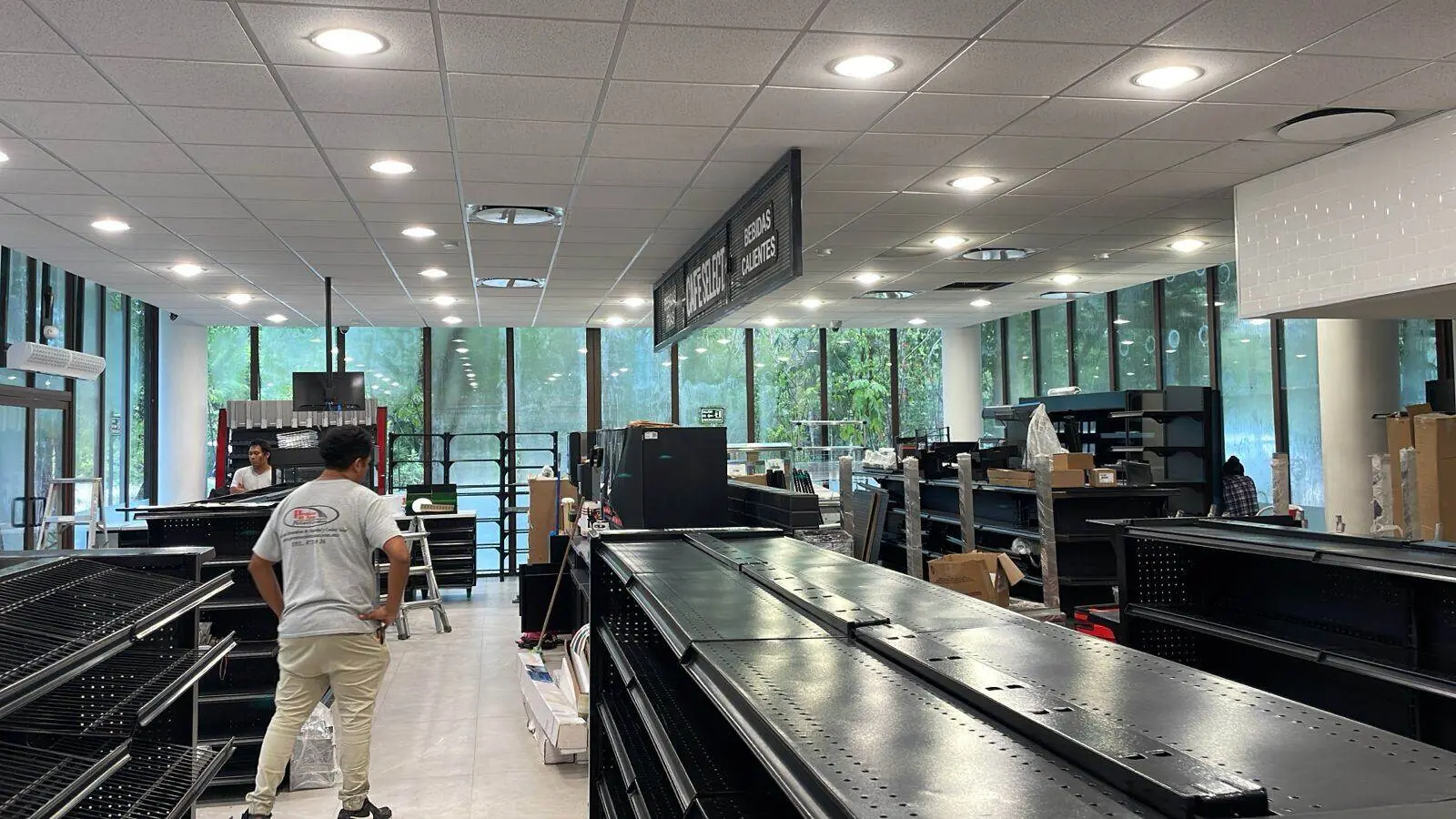
Size storage against the weather, not against sales
A normal resupply interval becomes several days when bad weather stops port operations. So tank capacity is calculated with headroom over peak sales and with an operating reserve, and the forecourt is designed for a comfortable, safe tanker discharge. Running out of product on an island is not a commercial inconvenience: it is closing.
Double wall, monitoring and island limestone
The subsoil is limestone and the island’s water table is the most sensitive resource here. Double-wall tanks with interstitial monitoring, double-contained piping, an impermeable bund at the delivery area, a separator on the forecourt drainage and documented tightness testing. That is what NOM-005-ASEA requires and what also protects the business from a liability that cannot be washed away.
Salt and wind on the canopy and equipment
Canopy, structure, dispensers and cabinets sit in permanent marine exposure. That means heavier galvanising or a marine coating, 316 stainless fittings and bolts, anchoring calculated for extreme wind and a six-monthly maintenance plan. An island station is preserved on a calendar, not with repairs once something has already failed.
Budget and programme for a station in Cozumel
2026 reference: a new three-island station with double walls, dispensers, canopy, store and forecourt works, between MXN 14 and 28 million in construction and installation, excluding land and brand rights. The eight to twelve per cent island differential comes from sea freight for tanks, structure and equipment, plus reinforced corrosion protection.
A realistic total programme is nine to fifteen months. The CRE permit and the ASEA authorisation dominate; works and installation take five to eight months and depend on scheduled shipments: tank, canopy and dispensers are planned in batches so crossings do not pile up.
Scope: from the permit to a station dispensing fuel
We cover concept and executive design with services engineering, calculation records and specifications for the ASEA file, integration of the CRE retail permit, land use and the municipal licence, Protección Civil sign-off, management of the highway junction, civil works, tanks and lines, dispensers, canopy, convenience store, forecourt works and commissioning tests.
The budget comes out as line items with quantities and unit rates; every change is priced and signed before execution and payments go against verified progress. We hand over as-built drawings, calculation records, tightness certificates and equipment manuals.
Why the calendar is built from the filings
The civil works of a station are predictable: four to eight months depending on size. What is not predictable are the CRE permit, the ASEA authorisation and the highway junction, which run in months and do not depend on the contractor. So we start the file before the final executive design and run the three fronts in parallel rather than chaining them.
Weekly reports with dated photographs and a fortnightly video call from site, in Spanish, English, German, French, Russian or Chinese. We work with investors and operators who do not live in the area and need to follow both works and filings remotely.
The ground in Cozumel: what it imposes on the project
- Municipality: Cozumel
- Environmental regime: SEMARNAT + ZOFEMAT, marine park
- Ground: island limestone
- Water table: high on the coast
- Salt exposure: severe
Every material arrives by ferry — logistics, not design, sets the schedule and the overrun.
- Federal SEMARNAT filing: the environmental resolution is the project’s critical path. Budget 4–8 months before the first excavation.
- ZOFEMAT frontage: the federal strip is not yours even if you buy the lot — it is concessioned separately and paid for annually.
- High water table: the foundation sits higher and the pool needs anchoring against uplift.
- Severe salt exposure: 316 stainless throughout the hardware, concrete cover above the code minimum and six-monthly maintenance. 304 pits within two years at this distance from the sea.
- Every material crosses by ferry: logistics owns the schedule. Consolidated purchasing and on-site storage stop being optional.
Compare with the other 40 zones in the zone checker.
Frequently asked questions
How much tank capacity is advisable on an island?
More than daily sales suggest. It is calculated on peak sales and on a resupply interval extended by bad weather, with an operating reserve. It is a larger upfront investment that avoids the worst case: a station closed for lack of product in high season.
Can a marine fuelling point be installed?
That is a different project with its own file: beyond CRE and ASEA, the maritime authority and federal zone use come in. It is handled separately and on its own calendar, because its timelines do not resemble those of a land station.
Do you only do the works, or the permit file too?
Both, and in practice they are inseparable: the drawings, calculation records and specifications the ASEA file requires are the same ones that govern the works. We assemble the file, respond to observations and coordinate the CRE retail permit with its holder.
What tests are handed over at the end?
Tightness certificates for tanks and lines, verification of the interstitial monitoring system, dispenser tests, as-built drawings, calculation records and manuals. Without that package the station cannot demonstrate compliance, and it is the first thing asked for in any later review.
Fuel stations on the Riviera Maya · Commercial construction · Zone checker · Cost calculator · House construction in Cozumel · Villas and hotels in Cozumel · Luxury villas in Cozumel · Clinics in Cozumel · Warehouses in Cozumel