Gas station construction and refurbishment in Isla Mujeres
Double-wall tanks, forecourt, canopy and the CRE-ASEA file with a single contractor.
On Isla Mujeres the fuel station is critical infrastructure in a minimal space: it supplies golf carts, scooters, service vehicles and boats, on an urban plot where a conventional forecourt does not fit.
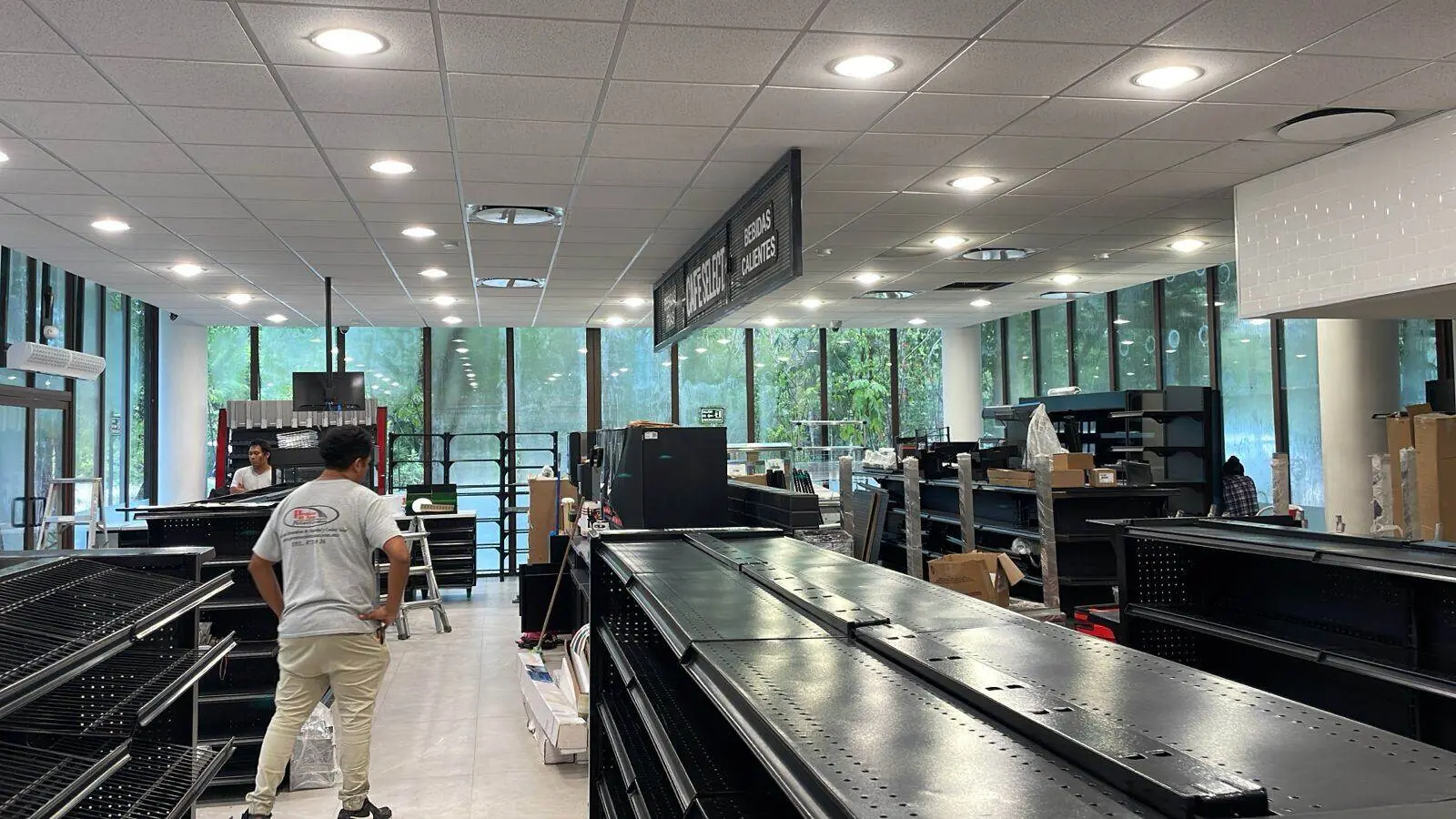
Minimal forecourt and a light fleet
The customer profile is different: golf carts, scooters and utility vehicles, not coaches or tractor-trailers. That allows more compact islands and small turning radii, but forces the queue to be resolved on a narrow urban frontage without blocking the street. The design is made with a real vehicle-per-hour count in season, not with a highway station template.
Supply by sea and reserve capacity
Fuel crosses from the mainland, so the resupply interval depends on weather and port logistics. Storage capacity is calculated with a reserve over peak sales, and the discharge manoeuvre is resolved in a small forecourt with a safety procedure and temporary traffic closure. It is an exercise in fine design, not in square metres.
Building without closing the service
If the station is the only one around, it cannot close for weeks. The refurbishment is planned in stages: one area under construction and another operating, with protection, signage and written procedures, and tank manoeuvres concentrated into short windows. That lengthens the nominal programme and avoids the one unacceptable outcome, which is leaving the island without fuel.
Budget and programme for a station in Isla Mujeres
2026 reference: a compact one- to two-island station with double-wall tanks, dispensers, canopy and a small store, between MXN 9 and 18 million in construction and installation, excluding land and brand rights. A refurbishment with tank replacement runs MXN 3 to 7 million, and rises if it has to be executed in stages without closing.
A realistic total programme is nine to fifteen months: the CRE permit and the ASEA authorisation dominate the calendar, and the works stretch because of the ferry, the heavy-vehicle restriction and staged execution to keep the service running.
Scope: from the permit to a station dispensing fuel
We cover concept and executive design with services engineering, calculation records and specifications for the ASEA file, integration of the CRE retail permit, land use and the municipal licence, Protección Civil sign-off, management of the highway junction, civil works, tanks and lines, dispensers, canopy, convenience store, forecourt works and commissioning tests.
The budget comes out as line items with quantities and unit rates; every change is priced and signed before execution and payments go against verified progress. We hand over as-built drawings, calculation records, tightness certificates and equipment manuals.
Why the calendar is built from the filings
The civil works of a station are predictable: four to eight months depending on size. What is not predictable are the CRE permit, the ASEA authorisation and the highway junction, which run in months and do not depend on the contractor. So we start the file before the final executive design and run the three fronts in parallel rather than chaining them.
Weekly reports with dated photographs and a fortnightly video call from site, in Spanish, English, German, French, Russian or Chinese. We work with investors and operators who do not live in the area and need to follow both works and filings remotely.
The ground in Isla Mujeres: what it imposes on the project
- Municipality: Isla Mujeres
- Environmental regime: SEMARNAT + ZOFEMAT, marine park
- Ground: thin island limestone
- Water table: very high; fragile freshwater lens
- Salt exposure: severe
Small island on a fragile aquifer — water treatment and the ferry outrank every other decision.
- Federal SEMARNAT filing: the environmental resolution is the project’s critical path. Budget 4–8 months before the first excavation.
- ZOFEMAT frontage: the federal strip is not yours even if you buy the lot — it is concessioned separately and paid for annually.
- Very high water table: forget the basement. Compacted fill platform, raft foundation and negative-side waterproofing.
- Severe salt exposure: 316 stainless throughout the hardware, concrete cover above the code minimum and six-monthly maintenance. 304 pits within two years at this distance from the sea.
- Every material crosses by ferry: logistics owns the schedule. Consolidated purchasing and on-site storage stop being optional.
Compare with the other 40 zones in the zone checker.
Frequently asked questions
Can a station be refurbished without closing?
Yes, and on the island it is usually mandatory in practice. It is executed in stages with one area operating, physical protection, signage and written procedures, and tank manoeuvres concentrated into short agreed windows. It lengthens the programme, but it avoids leaving the island without service.
How is tanker discharge handled in a small forecourt?
With a procedure: a defined position, a bund and impermeable paving, a temporary traffic closure at the frontage, trained staff and containment equipment to hand. The manoeuvre is designed, not improvised, and it forms part of the station’s safety file.
Do you only do the works, or the permit file too?
Both, and in practice they are inseparable: the drawings, calculation records and specifications the ASEA file requires are the same ones that govern the works. We assemble the file, respond to observations and coordinate the CRE retail permit with its holder.
What tests are handed over at the end?
Tightness certificates for tanks and lines, verification of the interstitial monitoring system, dispenser tests, as-built drawings, calculation records and manuals. Without that package the station cannot demonstrate compliance, and it is the first thing asked for in any later review.
Fuel stations on the Riviera Maya · Commercial construction · Zone checker · Cost calculator · House construction in Isla Mujeres · Villas and hotels in Isla Mujeres · Luxury villas in Isla Mujeres · Clinics in Isla Mujeres · Warehouses in Isla Mujeres