Gas station construction and refurbishment in Bacalar
Double-wall tanks, forecourt, canopy and the CRE-ASEA file with a single contractor.
Bacalar combines two things that rarely go together: constant federal highway traffic and a protected lagoon a few hundred metres away. A fuel station here is designed on the premise that any leak ends up in the water.
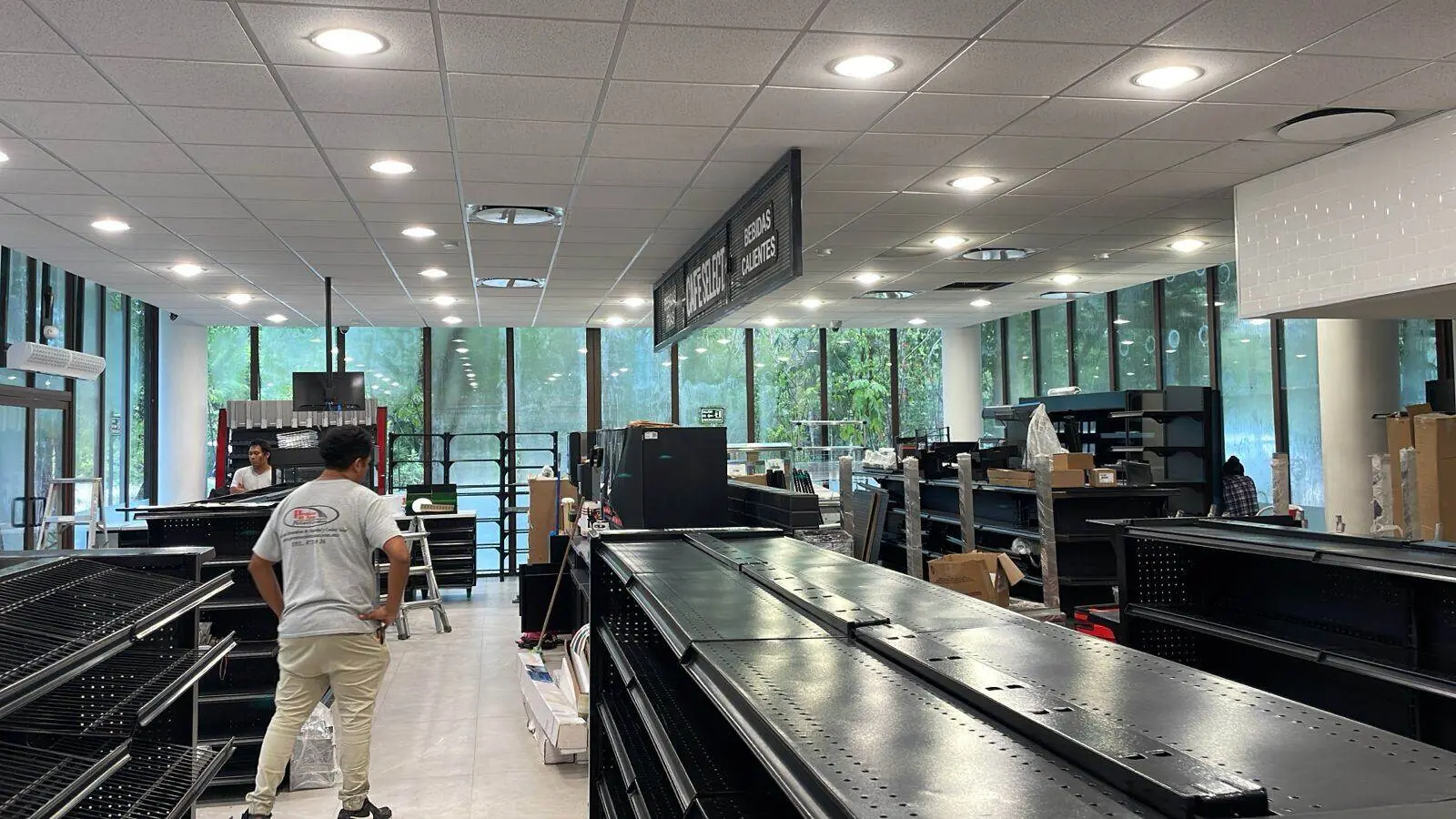
The lagoon changes the level of demand, not the rule
The rule is the same as anywhere in the country, but here the consequence of breaking it is visible and local. Double-wall tanks with interstitial monitoring, double-contained piping, an impermeable bund at the delivery area, a hydrocarbon separator on the forecourt drainage and documented tightness testing. Plus a spill response plan with real equipment on site, not a document in a drawer.
Pueblo Mágico: image applies to a station too
If the lot is near the historic core or on the approach to town, the canopy, colours, height and signage fall under image criteria. That does not prevent operating a brand: it is resolved with materials, tones and sign proportions worked out inside the file, rather than discovering the observation once the structure is already up.
Federal and state filings in a small municipality
The CRE permit and the ASEA authorisation are resolved as anywhere in the country, but land use, the licence and Protección Civil are processed at a small municipal counter with its own pace. And the federal junction is still a separate filing. That set defines the calendar far more than the construction does.
Budget and programme for a station in Bacalar
2026 reference: a new two- to three-island station with double walls, dispensers, canopy, store and forecourt works, between MXN 11 and 22 million in construction and installation, excluding land and brand rights. Civil works are somewhat cheaper than on the coast because there is no marine exposure; what rises is freight for tanks and equipment from the corridor or Chetumal.
A realistic total programme is nine to fifteen months. The CRE permit and the ASEA authorisation dominate; the municipal filing takes two to four months and the federal junction runs in parallel. Works and installation take five to eight months, with slack for specialist supply that does not exist in the municipality.
Scope: from the permit to a station dispensing fuel
We cover concept and executive design with services engineering, calculation records and specifications for the ASEA file, integration of the CRE retail permit, land use and the municipal licence, Protección Civil sign-off, management of the highway junction, civil works, tanks and lines, dispensers, canopy, convenience store, forecourt works and commissioning tests.
The budget comes out as line items with quantities and unit rates; every change is priced and signed before execution and payments go against verified progress. We hand over as-built drawings, calculation records, tightness certificates and equipment manuals.
Why the calendar is built from the filings
The civil works of a station are predictable: four to eight months depending on size. What is not predictable are the CRE permit, the ASEA authorisation and the highway junction, which run in months and do not depend on the contractor. So we start the file before the final executive design and run the three fronts in parallel rather than chaining them.
Weekly reports with dated photographs and a fortnightly video call from site, in Spanish, English, German, French, Russian or Chinese. We work with investors and operators who do not live in the area and need to follow both works and filings remotely.
The ground in Bacalar: what it imposes on the project
- Municipality: Bacalar
- Environmental regime: SEMARNAT (lagoon and stromatolites) + municipal
- Ground: limestone with lake sediment
- Water table: very high next to the lagoon
- Salt exposure: low
A freshwater lagoon with living stromatolites: zero discharge, a setback from the shore and restricted chemicals on the lakeside strip.
- Federal SEMARNAT filing: the environmental resolution is the project’s critical path. Budget 4–8 months before the first excavation.
- Very high water table: forget the basement. Compacted fill platform, raft foundation and negative-side waterproofing.
Compare with the other 40 zones in the zone checker.
Frequently asked questions
Is there a restriction on installing a station near the lagoon?
Land use is defined by the municipality and distance to water bodies is a criterion in the environmental file. In practice, the closer to the water, the more demanding the level of containment and monitoring that has to be demonstrated. We review it on the specific lot before committing to a project.
Do image criteria apply to a national brand?
The brand can be operated; what is adjusted is how it is materialised: tones, sign proportions, canopy height and materials. It is worked out inside the file and with the municipality, not as a later correction. In the historic core and on the approaches to town the criteria are stricter.
Do you only do the works, or the permit file too?
Both, and in practice they are inseparable: the drawings, calculation records and specifications the ASEA file requires are the same ones that govern the works. We assemble the file, respond to observations and coordinate the CRE retail permit with its holder.
What tests are handed over at the end?
Tightness certificates for tanks and lines, verification of the interstitial monitoring system, dispenser tests, as-built drawings, calculation records and manuals. Without that package the station cannot demonstrate compliance, and it is the first thing asked for in any later review.
Fuel stations on the Riviera Maya · Commercial construction · Zone checker · Cost calculator · House construction in Bacalar · Villas and hotels in Bacalar · Luxury villas in Bacalar · Clinics in Bacalar · Warehouses in Bacalar