Gas Station Construction and Remodelling in Cancún
Service stations — civil works, tanks, canopy and forecourt, with the station trading where possible
A service station is a regulated industrial installation that happens to look like retail. We handle the civil side in Cancún — forecourt, tank pit, canopy, shop and the sequencing that keeps a remodel trading — inside a permit file that is federal before it is municipal.
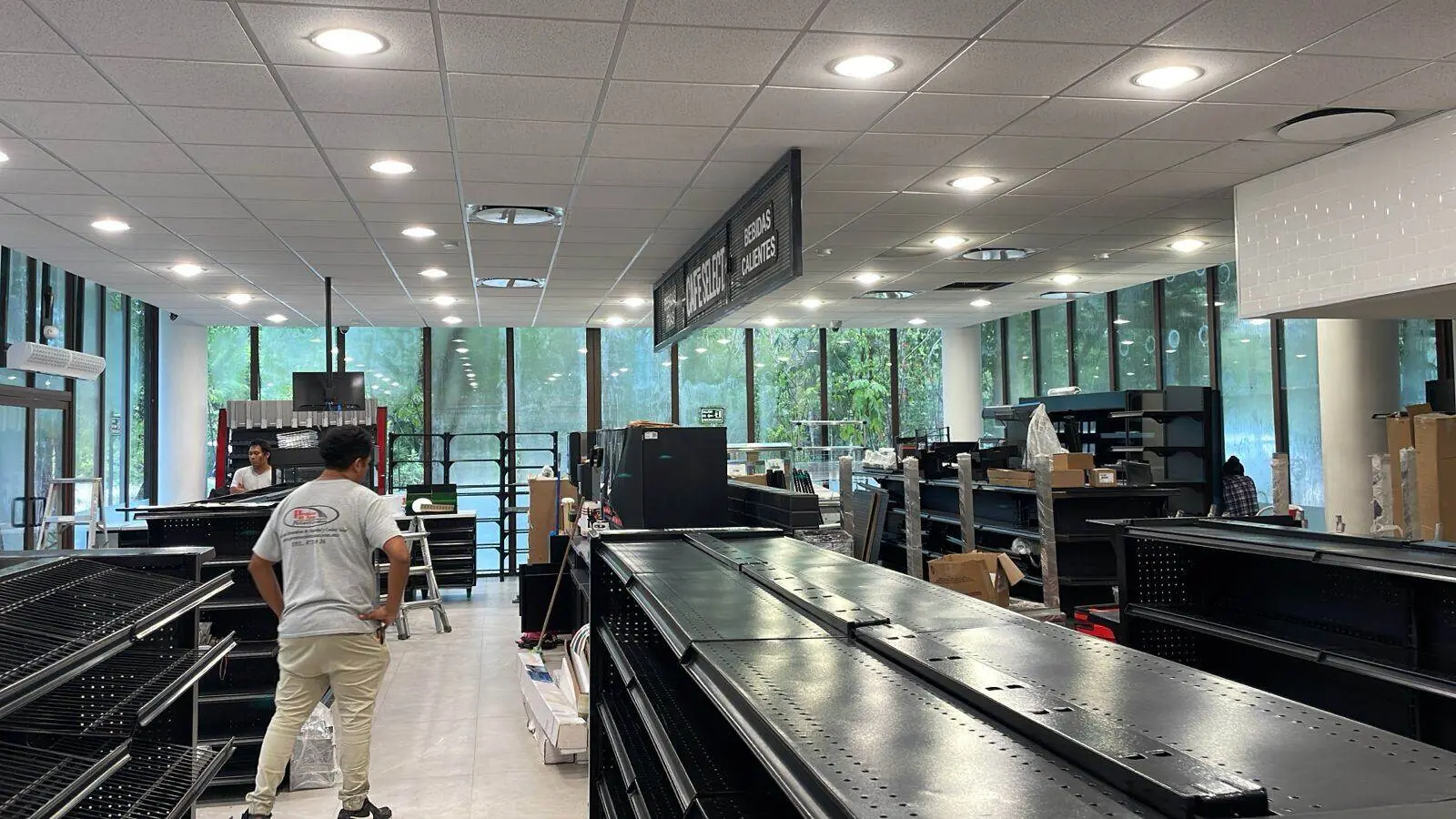
How the work splits
- Tank pit and containment: excavation in karst, impermeable containment, anchoring against uplift where the water table is high, monitoring wells.
- Forecourt slab: reinforced, falls to the interceptor, resistant to fuel and to continuous truck loading.
- Canopy: steel structure calculated for the wind zone, with the corrosion system specified for the distance to the sea.
- Shop, sanitary block and back of house, to the brand image manual where the station is franchised.
- Drainage and interceptor: oil and fuel separation before anything leaves the site.
The file is federal first
Fuel retail is regulated nationally. The permit to operate a station comes from the Comisión Reguladora de Energía, and the environmental and industrial safety side sits with ASEA, the hydrocarbons sector regulator, not with the state. The municipality issues the construction licence, but it issues it on top of those.
In practice that means the owner or the brand runs the CRE and ASEA track while we run the construction track, and the two have to be synchronised. A civil works programme that ignores the ASEA sequence produces a finished station that cannot legally dispense fuel.
Karst and the water table under a tank pit
Excavating a tank pit in limestone with voids is a different job from excavating one in soil. The void verification is not optional, and where the water table is high the tanks need anchoring against flotation — an empty tank in a flooded pit lifts.
Inland Cancún gives the easiest case: deep water, compact limestone. Towards the coast and the lagoon, and in the corridor towards Puerto Morelos, water rises and containment design changes. The zone checker shows the ground and water conditions for the specific area.
Where a station job is won or lost
Corrosion. Canopy steel, fixings and the dispenser island trim live in salt air. 316 stainless on the coastal side and a specified paint system inland, with the maintenance interval handed over in writing.
Levels. The forecourt has to drain to the interceptor from every point while staying comfortable for vehicles. Falls set wrong on paper become standing fuel-contaminated water on site.
Sequencing. Tanks, piping, slab and canopy interlock. Getting the order wrong means breaking new concrete to run a line that should have gone in first.
Remodelling without closing
Most station work is a remodel, and closing costs more than the work. We phase by island: one side trades while the other is rebuilt, with fuel deliveries and customer routes agreed before the first barrier goes up. Night work where the municipality allows it, and hot works scheduled around the tank farm rather than near it.
Cost and how we contract
On a service station a large share of the cost sits below the surface. The tank pit, the containment, the piping and the interceptor drive the budget harder than the shop and the canopy do, and that part depends on ground and water. On this building type, a price without a soil study is not a price.
So we work in two stages: site investigation, alignment with the regulatory track and a concept with a cost range, then a fixed price for construction. On a remodel the phasing plan joins the contract, setting which island goes out of service and when — the line item that decides how much trade is lost during the works.
The ground in Cancún: what it imposes on the project
- Municipality: Benito Juárez
- Environmental regime: municipal; FONATUR in the hotel zone
- Ground: urban limestone
- Water table: deep inland
- Salt exposure: moderate
Zoning runs by supermanzana — density and storeys change from one to the next.
- Municipal process only: the town hall sets the calendar, not an environmental authority. This is the fastest scenario in the region.
- Deep water table: conventional foundations, and an absorption well is viable if the soil study confirms it.
- Moderate salt exposure: 316 stainless outdoors, 304 acceptable indoors.
Compare with the other 40 zones in the zone checker.
Frequently asked questions
Do you handle the CRE and ASEA permits?
We handle the construction file and coordinate with whoever runs the CRE and ASEA track — usually the brand or the owner’s specialist. What we guarantee is that the civil works programme matches the regulatory sequence so the station is not finished and unable to open.
Can you build a station on a lot with a high water table?
Yes, with anchored tanks and a containment design that assumes flotation. The cost difference sits in the pit, not in the visible works, which is why the soil and water data has to be in hand before pricing.
How long does a station take?
Civil works on a straightforward inland site run a few months. The binding constraint is the regulatory track: the construction licence follows the federal permits, so the honest answer depends on where the CRE and ASEA files stand when we start.
Can the station keep trading during a remodel?
Usually yes, phased island by island. We agree the phasing, the fuel delivery windows and the customer circulation in writing before mobilising.
Do you work to a brand image manual?
Yes. We have built retail to franchise specification, including 7-Eleven and GoMart. The manual and the municipal code occasionally conflict; we resolve that before filing rather than at the inspection.
Gasolineras en Cancún (ES) · Commercial construction in Cancún · Construction permits in Cancún · Zone checker: Cancún